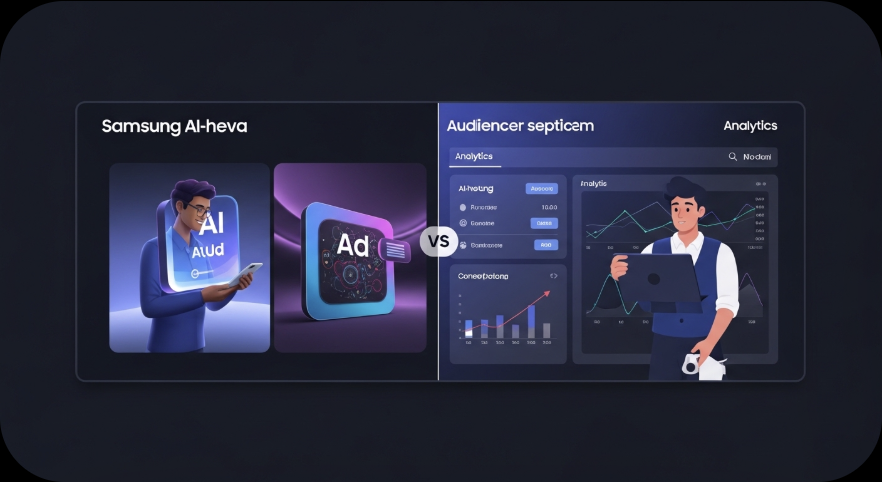
Samsung’s recent AI-assisted social videos are a useful case study for every growth and brand team. The company moved quickly, used generative tools at scale, and added small disclosures. But the audience still noticed visual inconsistencies, and the conversation shifted from product value to content credibility.
For business teams, this is the real lesson: AI speed is not the same as audience trust.
What changed in practice
- Teams can now produce campaign variants much faster with AI-assisted editing.
- Creative testing cycles become cheaper and easier to run.
- But quality control pressure moves upstream: people now inspect authenticity cues more closely than before.
Why this matters for end-users and businesses
When users suspect an ad is synthetic or misleading, they do not just question the video. They question the product promise behind it. In practical terms, that can mean lower click-through quality, weaker conversion intent, and higher brand skepticism over time.
A practical operating model for marketing teams
- Use AI for iteration, not for unverified claims — especially in product demo contexts.
- Add clear disclosure standards that are consistent across channels, not tiny one-off labels.
- Introduce a trust QA checklist before publishing (visual coherence, claim evidence, labeling consistency).
- Measure trust signals alongside performance metrics (negative comments, save/share quality, brand-safety sentiment).
The winning teams will not be the ones that publish the most AI content. They will be the ones that combine AI speed with transparent, high-confidence storytelling.
If you’re planning your AI adoption roadmap, take 2 minutes to share where your team is now: https://dakik.co.uk/survey