Introduction
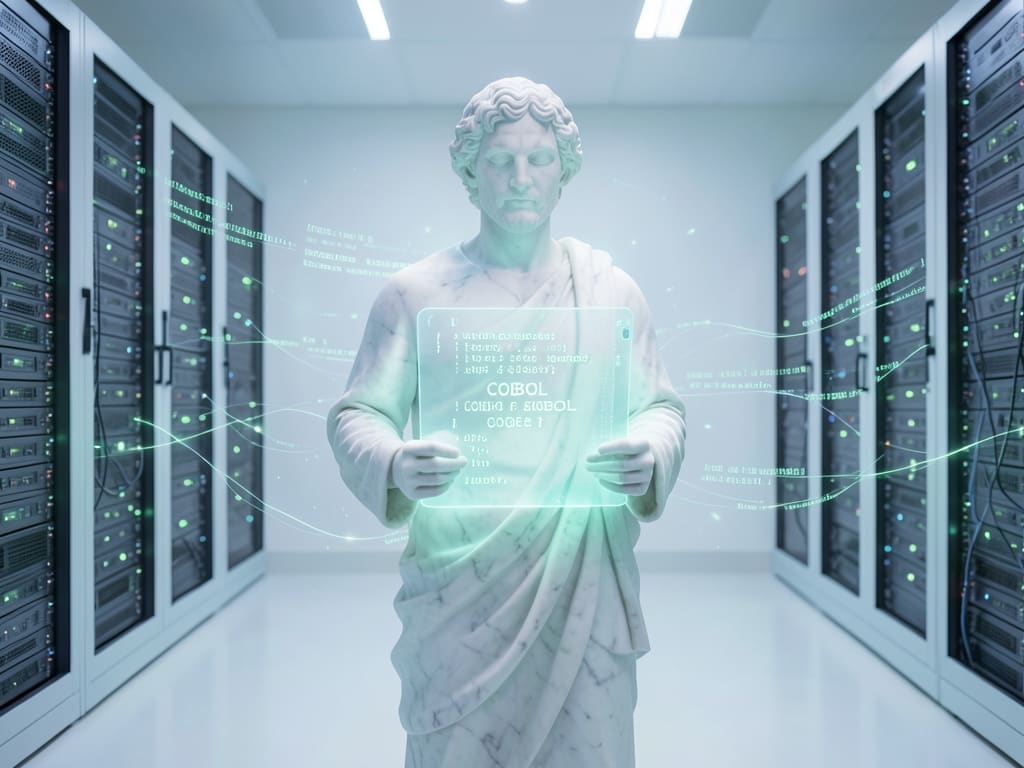
For decades, the backbone of banking and insurance systems has been written in COBOL – a language born in the 1960s. While it remains remarkably reliable, the code is difficult to maintain, and finding skilled developers is a growing challenge. Enter AI: language models are now stepping in to translate this “ancient” code into modern languages, dramatically speeding up legacy modernization.
The Legacy of COBOL
- 80 % of core banking systems run on COBOL.
- Most COBOL developers are aging; new talent is scarce.
- Rewriting from scratch is expensive and risky.
AI‑Powered Rewriting
OpenAI’s Claude and IBM’s expertise have joined forces to create a pipeline that can:
- Parse COBOL syntax and logic.
- Generate equivalent code in languages like Java or Python.
- Flag potential bugs and suggest optimisations.
This reduces manual effort from months to days and cuts costs by up to 60 %.
Claude’s Role and IBM’s Collaboration
IBM’s Quantum and AI labs provided the heavy lifting in data security, while Claude’s natural‑language understanding bridges the gap between legacy code and modern frameworks. The result? A proof‑of‑concept that already processed over 1 M lines of COBOL in a single sprint.
Market Response
Investors and banks are rushing to secure contracts:
- Several funding rounds announced for AI‑based modernization startups.
- Existing banks are piloting the technology in pilot projects.
- Regulatory bodies are taking note, ensuring compliance remains intact.
Future Outlook
The success of this partnership signals a shift:
- More AI tools will target other legacy languages.
- Cloud‑native migration becomes more viable.
- The financial sector can finally retire the “Cobol‑ghost” without breaking the system.
Conclusion
AI’s ability to demystify COBOL is turning a longstanding pain point into a competitive advantage. If your organisation still runs on legacy code, now is the time to explore AI‑powered modernization.
Ready to future‑proof your IT? Take our quick survey and let us know your challenges! Take the Survey