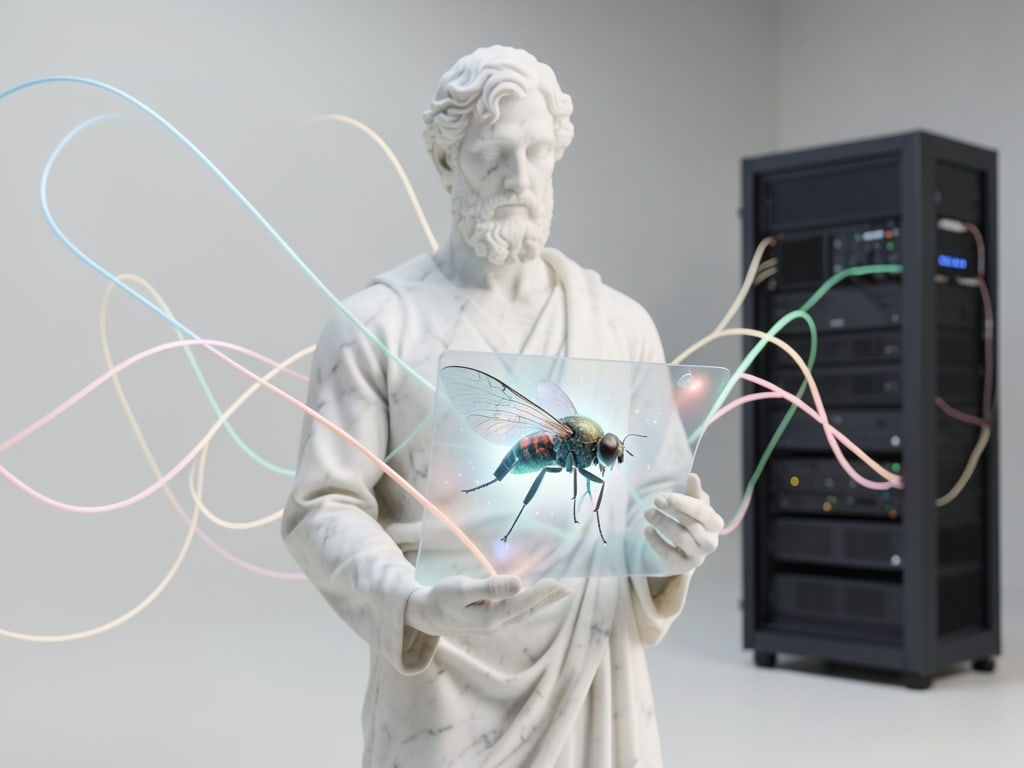
The Viral Fly Phenomenon
Last week, a short video of a 3D‑rendered fly—complete with swarming wings and a glowing neural mesh—took X (formerly Twitter) by storm. Posted by San‑Francisco based Eon Systems, the clip was hailed by many as a leap toward “digital human intelligence,” sparking comments that ranged from awe to outright skepticism.
Decoding the Technology Behind the Hype
Eon Systems claims to be building a framework for uploading biological brains into digital environments. The fly video was meant to showcase a proof‑of‑concept—a simplified model of insect neurophysiology that can be simulated in real time. The team’s “digital fly” is essentially a neural‑network representation of a fruit‑fly’s nervous system, trained on neural recordings and then rendered in a virtual world.
While the idea of a living digital fly is exaggerated, the underlying tech—spiking‑neuron models, reinforcement learning, and high‑resolution brain‑scan data—is very real. However, the current models are far from the complexity of a human mind.
Why a Fly Matters in the Quest for Digital Consciousness
Scientists often use flies because their nervous systems are small, well‑mapped, and easier to record than a human brain. By starting with a fly, researchers hope to debug the “brain‑to‑code” pipeline before scaling to larger, more complex organisms.
Yet the public’s fascination with the video is less about the fly itself and more about the tantalizing promise of uploading consciousness—a concept that still resides firmly in science fiction.
The Ethical and Scientific Limits
Even if a fly’s neural network can be simulated, that doesn’t automatically grant it self‑awareness or a sense of self. Most experts agree that true consciousness would require not just a structural map but an embodied experience in a rich environment—something current simulations lack.
Furthermore, the debate raises ethical questions: Is it right to create a digital copy of a living organism? What responsibilities do we bear toward a potentially sentient simulation?
What This Means for the Future of AI and Digital Humans
The viral fly reminds us that progress in AI and neuro‑tech can be both exhilarating and misleading. While the technology is advancing, the road from a simulated fly to a digital human—or even a “digital brain” that can truly feel—is still a long and uncertain one.
The next steps will likely involve more sophisticated models and larger datasets. Until then, we should keep our excitement grounded in the science, not the hype.
Ready to Explore More AI Trends?
If you’re curious about where artificial intelligence is headed—and want to help shape the conversation—join our community survey! Your insights could steer the next wave of innovation.