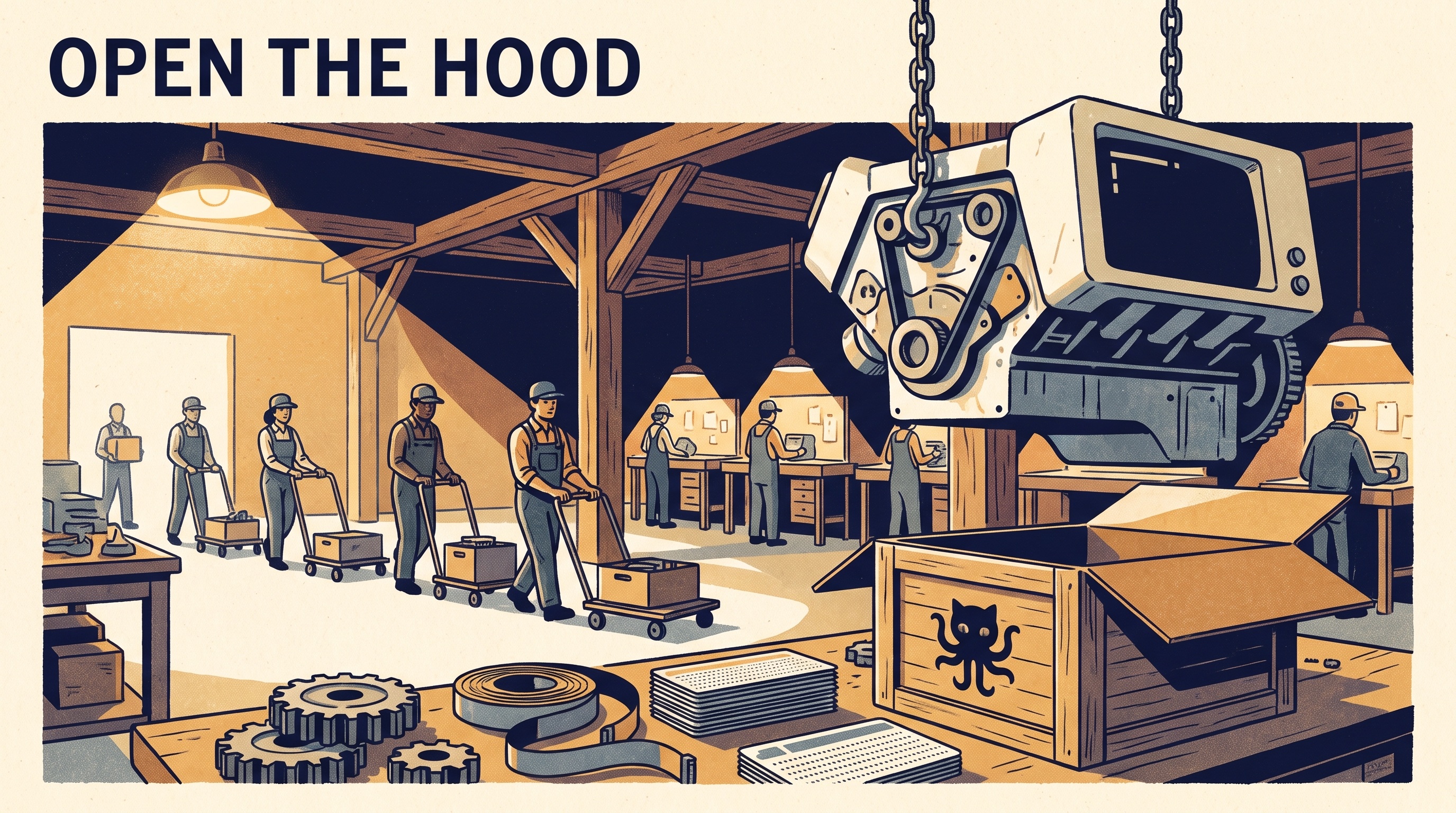
xAI shipped something quietly significant yesterday. Grok Build, their coding agent and terminal interface, is now open source. The code is on GitHub, free to read, fork, and run.
That might sound like a developer relations move. It's more useful than that.
What You're Actually Getting
Grok Build is a full coding agent. It handles context assembly, tool-call dispatch, and orchestration across what xAI calls a harness. The open-source release covers the whole thing, including how it loads and invokes skills, plugins, hooks, MCP servers, and subagents.
The announcement puts it plainly: "You can read the source to see exactly how it works, from context assembly to tool-call dispatch." That's not marketing language. That's a genuine invitation to look under the bonnet.
There's also a local-first mode. You can compile Grok Build yourself, point it at your own inference endpoint, and drive it entirely from a config.toml file. No API keys phoning home, no usage metering, no external dependency you don't control. For teams building internal tooling or working in regulated environments, that's a real option now.
Why This Matters Beyond "Cool, Open Source"
The agent space is littered with frameworks that look impressive in demos and fall apart in production. Most of them are opaque. You can't see why the agent made a particular tool call, why context was assembled the way it was, or why a skill fired at the wrong moment.
Grok Build removes that excuse. The source is the reference. If something behaves unexpectedly, you can trace it. If you want to extend it, you know where to look. That kind of transparency is genuinely rare in production-grade agent codebases.
The local-first angle matters too. Running your own inference means your data stays on your infrastructure. For enterprise clients dealing with legal, compliance, or confidentiality requirements, this changes the conversation entirely. You're not asking anyone to trust a third-party API. You control the model, the data, and the runtime.
MCP (Model Context Protocol) support is baked in. That means Grok Build can talk to the same ecosystem of tools, APIs, and data sources that other MCP-compatible agents can reach. It's not a walled garden.
The Thing Builders Should Notice
What's interesting here isn't just that xAI open-sourced a coding agent. It's the architecture they chose to expose. Skills, plugins, hooks, subagents as first-class concepts. A harness model that separates the orchestration from the model itself. A config-driven runtime you can inspect and override.
This is roughly how you'd architect any serious agent system. Not a single model call with a big prompt, but a modular harness where components are swappable and auditable. xAI building publicly on that pattern signals something about where production agent development is heading.
If you've been following the Grok ecosystem, we looked at how Grok 4.5 was co-developed with Cursor a couple of days ago. Grok Build is the runtime sitting alongside those model capabilities. The two are related.
What Dakik Can Do With This
We build agent infrastructure for product teams. That means RAG pipelines, custom tooling, MCP integrations, and orchestration layers that actually work in production rather than demo conditions. We've been deep in this space before it had a name.
If you're a founder or product lead trying to work out what this architecture means for your product, here's the honest version: the model is the easy part. The hard part is the harness. How does context get assembled? Which tools get called and in what order? How do you audit what the agent actually did? How do you run this on your own infrastructure without handing your data to a third party?
Those are engineering problems, not AI problems. And they're exactly what we help with.
Whether you want to build on top of something like Grok Build, design your own harness, or integrate an agent layer into an existing product, the architecture questions are the same. Grok Build being open source means your team can study a real, working example. That's worth doing before you start building.
Have a look at the GitHub repo and see how it's put together. If you want to talk through what something similar would look like for your product, you know where to find us.